
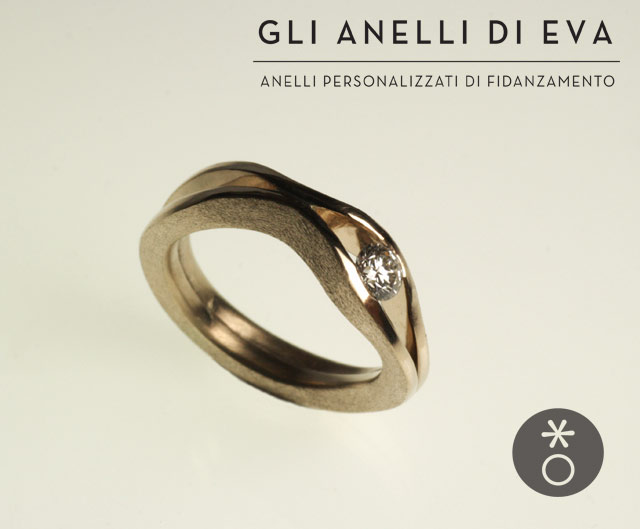
In the second half of the 19th century, platinum became very popular in Europe and began to be considered the most suitable metal to accompany diamonds. Its extremely high price, however, made it the property of a few, so around 1922 some studies were carried out to develop a process for mass production. white gold alloys as its cheaper substitute. Today that the price of the two metals is very similar, it is no longer necessary to resort to gold as a “surrogate” for platinum, yet For me, gold remains the best material for an engagement ring. But how can you avoid allergies?
In jewelry, gold is almost never used pure, because in alloys – that is, alloyed with other metals – is more tenacious and resistant to wear and tear. Creating an alloy also allows you to modify its typical yellow color and obtain other shades, including white that is similar to the color of platinum. To this end, a certain amount of nickel, silver, or palladium is added to the gold.
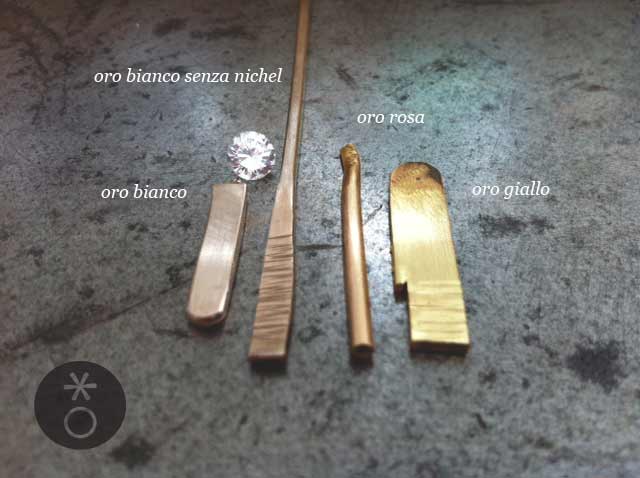
The main colors of 18 kt gold alloys are: unplated white gold, nickel-free white gold, pink gold and yellow gold.
It is precisely the nickel that is responsible for the skin reaction of redness and burning that many women and men are familiar with.. But avoid the allergy caused by the engagement ring or other jewelry in white gold Now it is easy. In fact, over time the alloys have changed and today the concentration of nickel is much lower than before, at 0.05%.
In addition Over the last twenty years, the increase in contact allergies has favored the spread of alternative alloys containing palladium instead of nickel.
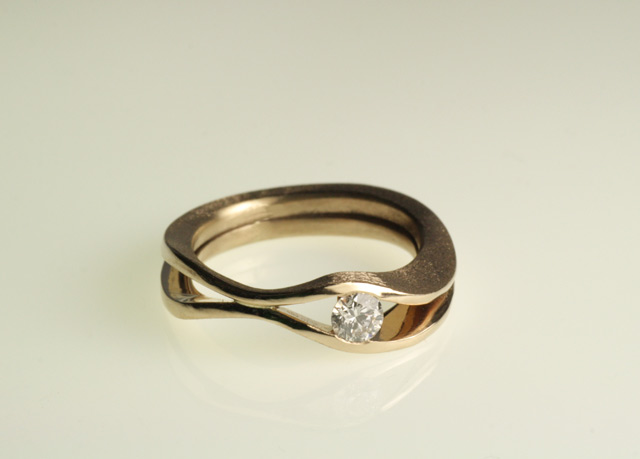
Engagement ring for Valentina, in 750 white gold without nickel, with ethical diamond.
For my jewelry, I recommend the white gold alloy without nickel with palladium, also because it has a slightly warmer color, between white and gold. pink, Which I prefer because it evokes the skin.
If you still have any doubts or special needs Contact me via emailMetals and precious stones are my passion and I love sharing them with others!
Eva